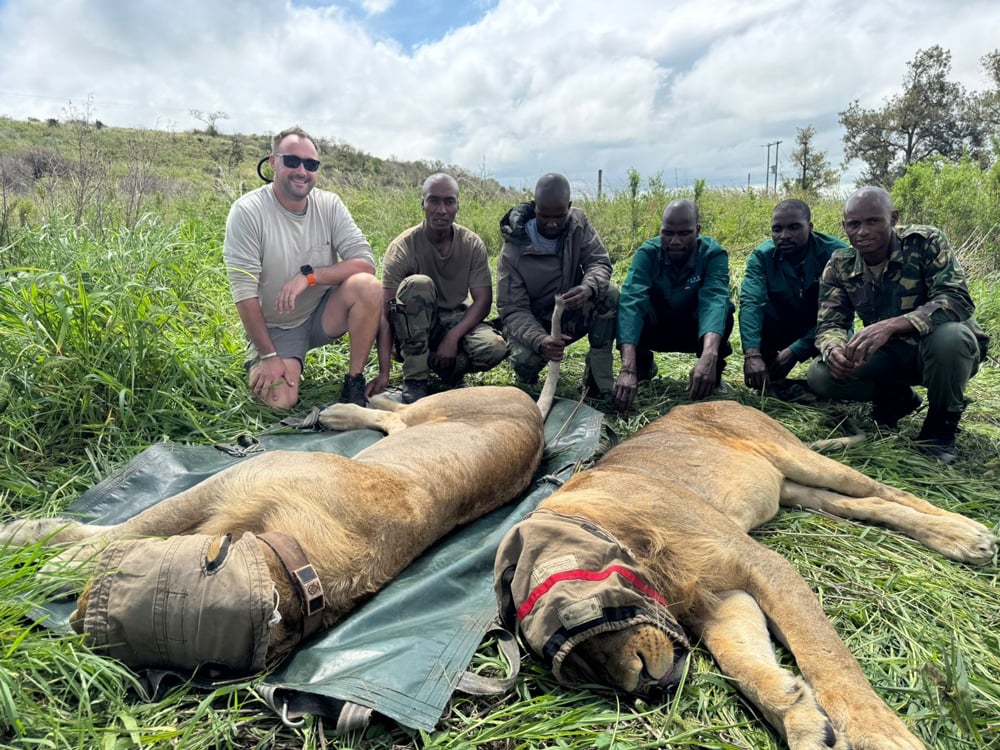
Rhino poachers don’t have far to travel to reach Nambiti. The reserve sits on a major corridor between Durban, Johannesburg, and Mozambique—an area where neighbouring parks have lost a dozen rhinos in a single night. And yet, for more than a year, Nambiti hasn’t had a single poaching incursion. The reason lies with a community that protects this land as fiercely as the wildlife on it, and with a small anti-poaching team rebuilt from the ground up.
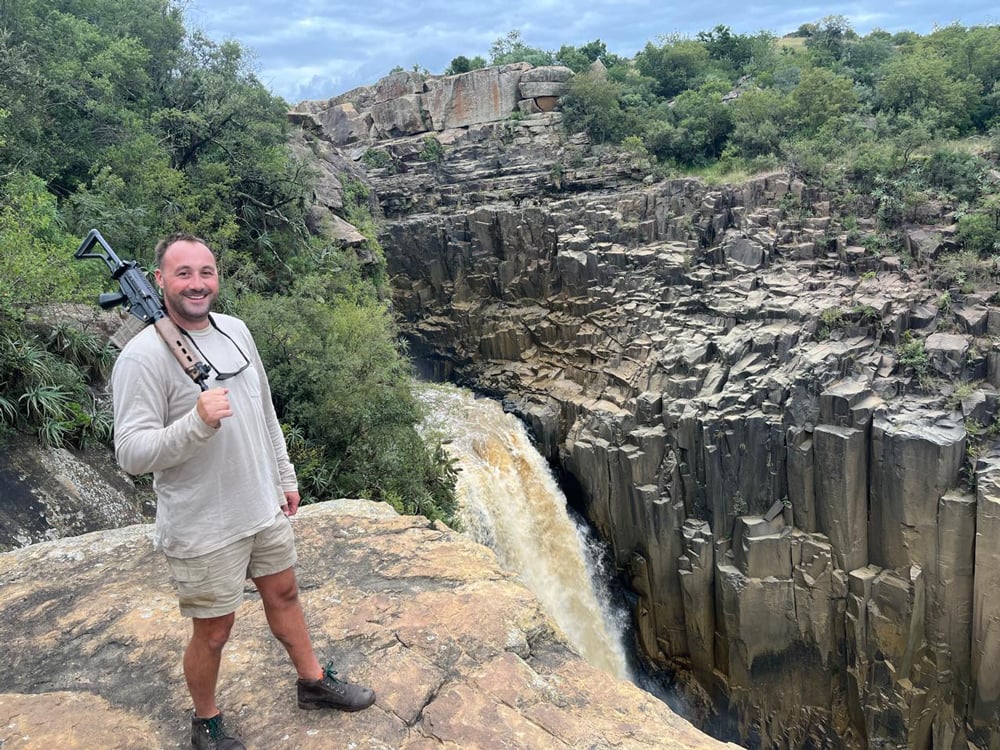
At the centre of that story is Kyle Preston, Nambiti’s Anti-Poaching & K9 Manager.
Kyle’s path into conservation began early. His mother worked for what was then the Natal Parks Board, helping manage iconic parks like Hluhluwe–iMfolozi and co-authoring a book on tortoises of Southern Africa. “Just being out there with her was amazing,” he says. “A real eye-opener for me. I think it’s just an ingrown passion I’ve had to become a conservationist.”
He started formally in 2016 as a guide in northern KwaZulu-Natal, but quickly realised guiding was only a small part of the work he wanted to do. “There’s more to conservation than just sitting in a vehicle, being a jeep jockey,” he says. That led him into reserve management roles across South Africa, including three years in Kruger National Park working on elephant, rhino, and leopard monitoring projects.
The anti-poaching unit had been through a difficult period, but the foundation was strong. “Unfortunately, before my time, the anti-poaching unit was really not motivated at all,” he says. His focus from day one was rebuilding structure, skills, and morale. “We’ve been doing a lot of training with the guys, getting tactical training—all the fun things of why most people get into the bush. Spending a lot of time with the different rangers, meeting their families. It’s made a world of difference.”
Turning that around has been his first major task.
“We’ve basically been doing a lot of training with the guys, getting tactical training—all the fun things of why most people get into the bush,” he says. “Spending a lot of time with the different rangers, meeting their families. It’s made a world of difference.”
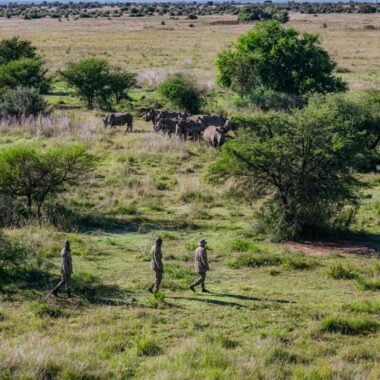
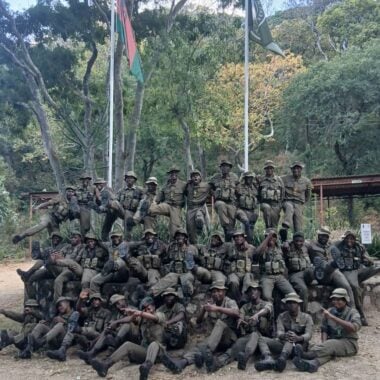
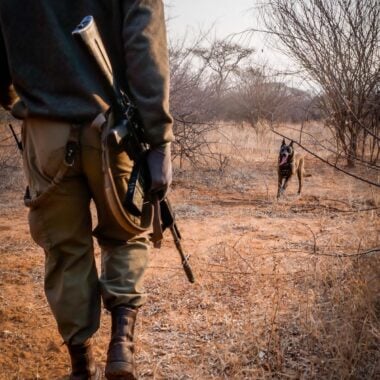
Today, his 19-person team operates from a central base. “Initially, they were all separated into different camps,” he says. “Now everyone works from one operating station, and they go out in teams of two, either on foot or by vehicle.”
Around that base, Kyle has structured a series of specialised units:
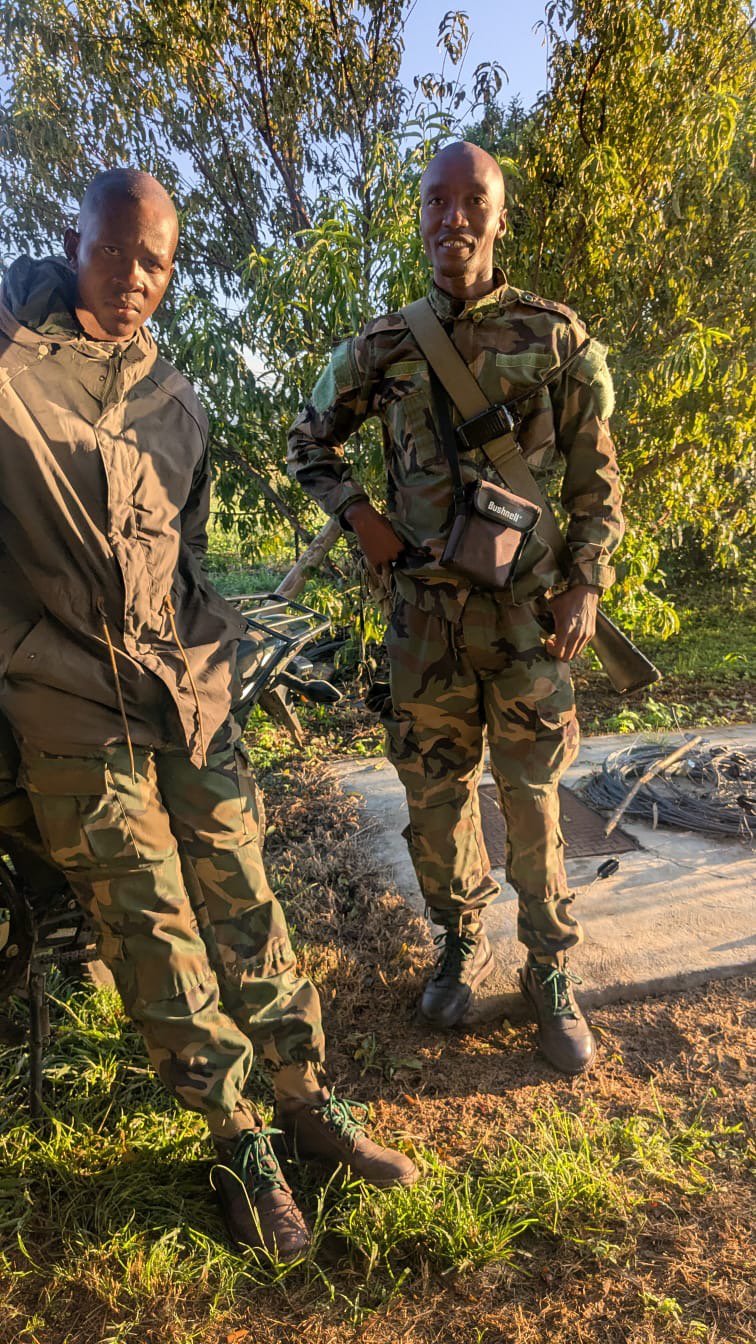
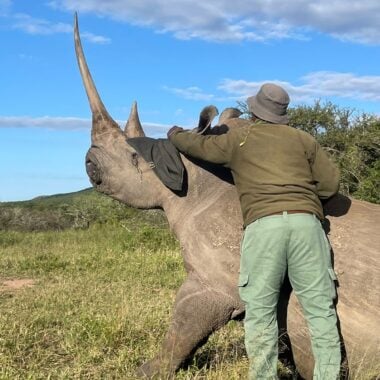
• Rhino monitors on motorbikes—armed and responsible for tracking every rhino on the reserve, using telemetry for black rhino and visual monitoring for white rhino.
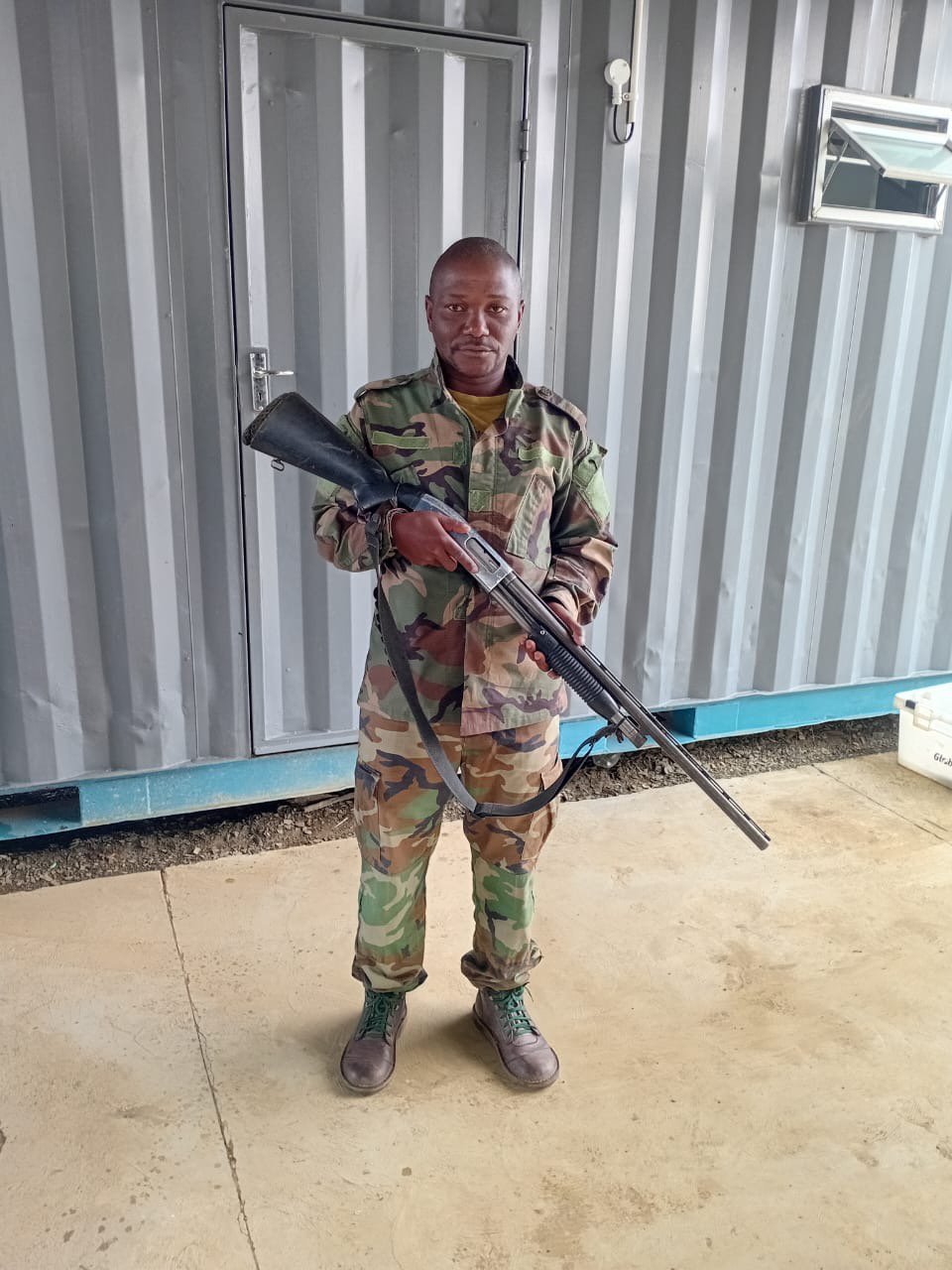
• A quick reaction team—armed responders moving in Land Cruisers.
• A fence team—checking the entire perimeter daily for faults, cuts, tracks, or signs of an attempt to breach the reserve.
“Touch wood, we haven’t had any incursion at all this year,” Kyle says. “No fence lines cut, no dogs being put in to try to poach.”
That’s not because the region is quiet. Quite the opposite.
“Being so accessible from Durban, Johannesburg, and all your major cities—and we’re on the route between northern Natal, Mozambique, and Johannesburg—this is a hotspot for rhino poachers,” he says. “Just within 30 kilometres of us, another reserve lost 12 rhinos overnight. These guys are active, and that’s purely because they’re coming from the major cities.”
That success isn’t due to isolation. The region remains one of the most pressured in the country. Just 30 kilometres away, another reserve lost 12 rhinos overnight. Poachers move easily along the transport routes connecting the coast to Gauteng and Mozambique.
Twenty-five years ago, South African businessman Rob le Sueur bought up a cluster of cattle farms near Ladysmith, chasing a vision of a Big 5 reserve in an area better known for battlefields and beef. He expanded the landholding to 10,000 hectares, tore down kilometres of old barbed-wire fences, and erected a high, predator-proof game fence around the perimeter.
“Back in the day, the biggest jobs would have been to remove all the internal fences,” Kyle explains, “then fence the whole area with a Big Five standard fence. That’s a lot of money. On top of that, you’ve got all the permits. You’re trying to convince locals you’re going to put buffalo here, while they know buffalo are disease carriers. It was a long project. It didn’t just happen overnight.”
What Nambiti has, and what many reserves don’t, is a unique ownership model.
Twenty-five years ago, businessman Rob le Sueur bought a collection of cattle farms near Ladysmith and began stitching them into a Big 5 reserve. He removed kilometres of internal fencing, erected a predator-proof perimeter, and began the slow, expensive process of applying for permits to reintroduce large mammals.
“It didn’t just happen overnight,” Kyle says. “You’re trying to convince locals you’re going to put buffalo here, while they know buffalo are disease carriers.”
Then a land claim was lodged, and the community took ownership. Instead of abandoning the project, Rob negotiated a compromise: lodge owners would privately own their nodes and the animals, while the broader reserve would belong to the community.
“The community owns all the land,” Kyle says. “It gives them a real sense of ownership of Nambiti.”
That ownership anchors the reserve’s security. “All staff from Nambiti are generally employed from the community,” he says. His entire anti-poaching team comes from the surrounding villages; so do farm staff and around 90% of lodge staff. The reserve also includes a fully community-owned lodge where locals train for hospitality careers.
The result is a landscape where strangers stand out, and word travels quickly. “We usually know of any unknown vehicles or unknown people before they even get close to Nambiti,” he says. “Because all the rangers are from the local community, their families and everyone are invested in it.”
The rangers aren’t just employees. Their families live in nearby villages; their children attend local schools. They are, quite literally, protecting their own future.
“Because all of the rangers are from the local community, their families and everyone are invested in it,” he says. “And that has played a big part in keeping Nambiti’s rhinos safe.”
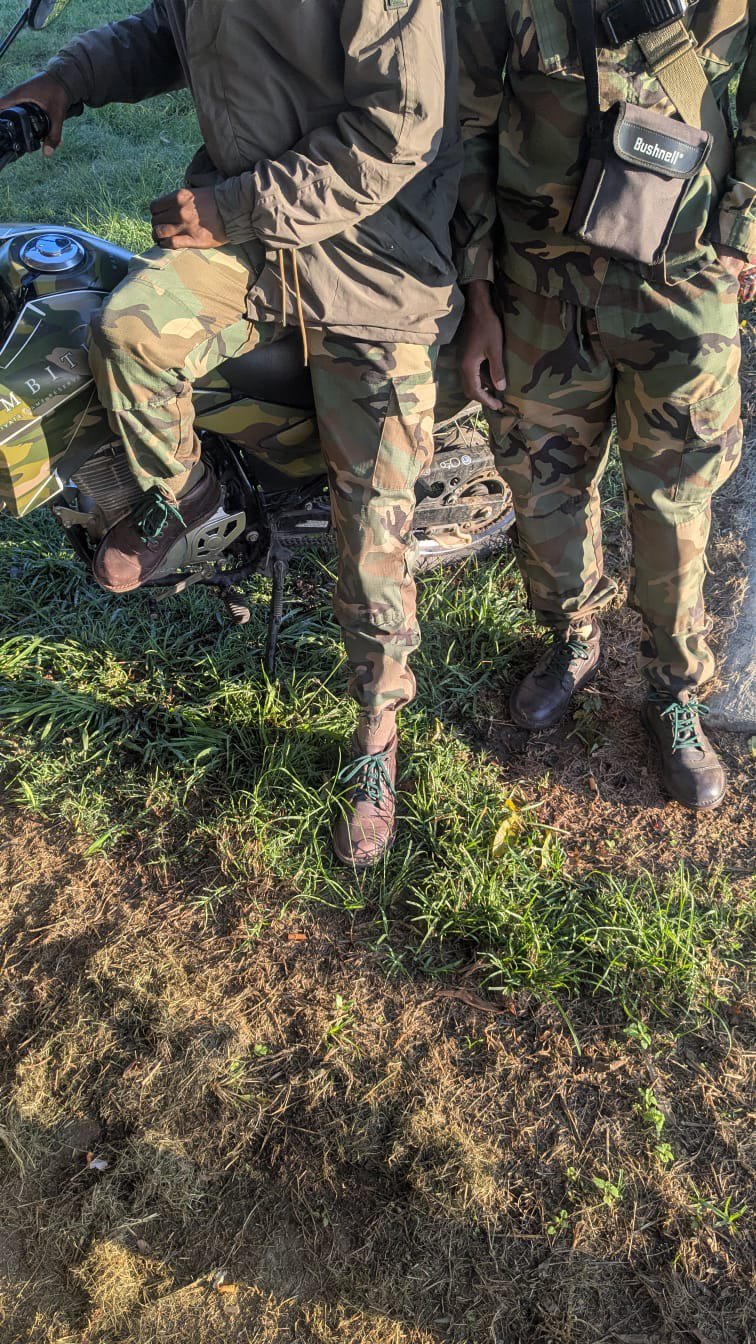
For the unit on the ground, long hours are unavoidable. “There are times when I’ve got some chaps out for 16 hours a day,” Kyle says. “That can be a foot patrol, a K9 patrol, or driven patrols.”
Until recently, most of the rangers were wearing whatever old boots they could afford. “A lot of times, these guys are wearing old army boots, which are absolutely horrendous,” he says.
Through the Boots for Rangers initiative with the Game Rangers Association of Africa, Nambiti received 19 pairs of Jim Green Ranger boots, one for every member of the unit. “My K9 units, my fast reaction armed team, my walking patrols and sweep patrols, they all received them,” he says. “The happiness I saw when the guys got the boots was really, really great.”
The boots have become a practical, morale-boosting part of the work. “The Jim Green boots have been a serious role player in getting my team to the state they’re in,” Kyle says. “A good pair of boots has made a world of difference.”
In a reserve bordered by highways, protected by community vigilance, and patrolled by people whose families live just beyond the fence, every detail contributes to keeping rhinos alive.
Rhino protection here isn’t a wall; it’s a network. And right now, that network is working.
Nambiti’s model is simple: invest in people, and people invest in the reserve.
Cheers,
The Jim Green Team
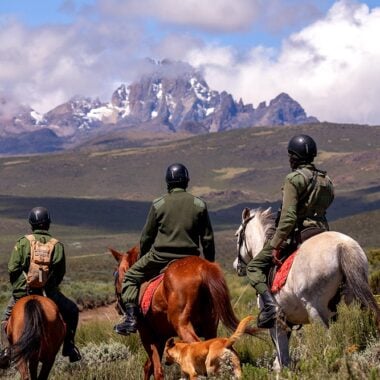
Through our Boots for Rangers initiative, run in partnership with the Game Rangers Association of Africa, we donate one pair of boots to a ranger for every ten pairs sold from our Ranger range. These boots are now supporting conservation teams at sites across Africa, with over 6,000 pairs already on the ground.